Robert Parsons: A master of polyphonic writing, successor to John Sheppard and mentor to William Byrd, who died tragically in his mid-30s. Have a listen to his gorgeous Ave Maria.
Lassus: Missa Vinum Bonum
One last Early Music Monday of celebration before the season of Advent begins! Clearly Lassus had no problem with festivity - he even based an entire mass on a song about good wine!
Bach's large family
In addition to being a giant of an organist and composer, J.S. Bach was the youngest of eight children, and he had seven children with his first wife and thirteen with his second…
Michelangelo and the Sibyls
Not only do the sibyls show up in the Requiem mass, they’re also on the ceiling of the Sistine Chapel. Pagan priestesses? In a Christian chapel in the Vatican?

Dies Irae and the Sibyls
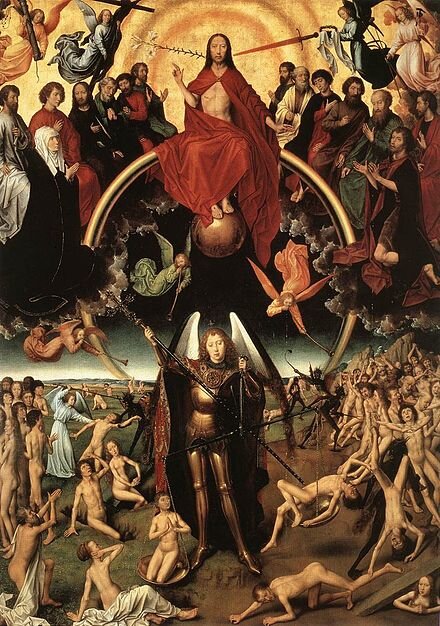
“Dies irae, dies illa… teste David cum Sibylla.”
Day of wrath, that day, … as David witnessed with the Sibyl.
Wait … who exactly was this Sibyl? And why does she show up in the Requiem mass but not anywhere else in scripture or the liturgy? Early Music Monday continues with part 2 of Sacred or Secular this week!

Dies Irae
It’s Requiem season, so this week’s Early Music Monday takes a peek at the Dies Irae chant. Not only is it one of the most frequently used melodies in all of western classical music, the text walks a very fine line between sacred scripture and pagan imagery… but more about that next week!
Who murdered Leclair?
An unsolved mystery for Early Music Monday - who murdered Jean-Marie Leclair? Was it the ex-wife or his nephew?

Thomas Weelkes
“He literally peed on his boss and showed up to work drunk all the time and he never lost his job. How good do you have to be as an organist/composer to behave like that?!”
How to read chant notation
Next up in Early Music Monday, a quick and dirty guide to reading neumes and chant notation! There are many different opinions on the “right” way to perform chant, but the basics of how neumes should be read are the same for all of them.
Hildegard von Bingen
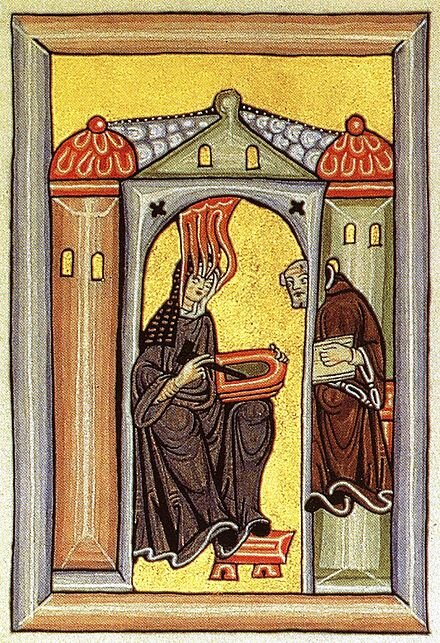
In a time when women had few rights and little power, Hildegard von Bingen corresponded with popes and emperors, invented her own language, oversaw a Benedictine convent, and is considered by many to be the founder of the study of natural history in Germany. Oh, and her music is pretty awesome too…