Most brass players know Giovanni Gabrieli for his canzonas, but his scope was much wider than that. Check out this fantastic video to hear more (and learn more from their excellent notes)!
Vibrato and historic organs
Following up on Early Music Sources’ excellent video on vibrato from a few weeks ago, here’s an article that explores the topic in more detail (especially about historic organs)!
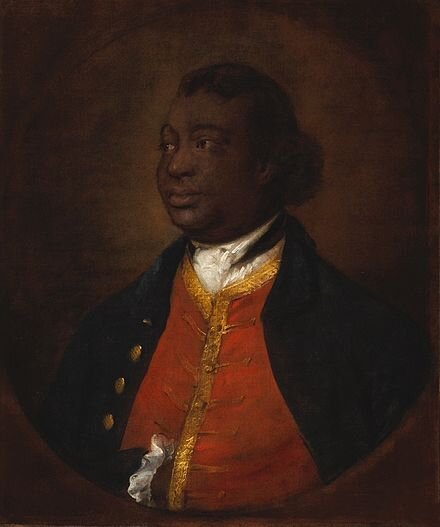
Ignatius Sancho
Ignatius Sancho - ever heard of him?
He spent his early life enslaved (and then in service), and was also a writer and composer. Read more about him below and then come hear some of compositions in Handel + Haydn Society’s “Every Voice” concerts this weekend!
Hieronymus Praetorius
If Michael Praetorius was so important, how does Hieronymous Praetorius fit in?
Michael Praetorius
Why is Michael Praetorius so significant for early music theory? And how did a German end up with a Latin last name?

Dances from Terpsichore
This week’s Early Music Monday looks at once of my perennial favorites - Michael Praetorius - and Terpsichore, his fantastic collection of instrumental dances. Read more about the collection here, and then check out this fantastic video from Voices of Music!
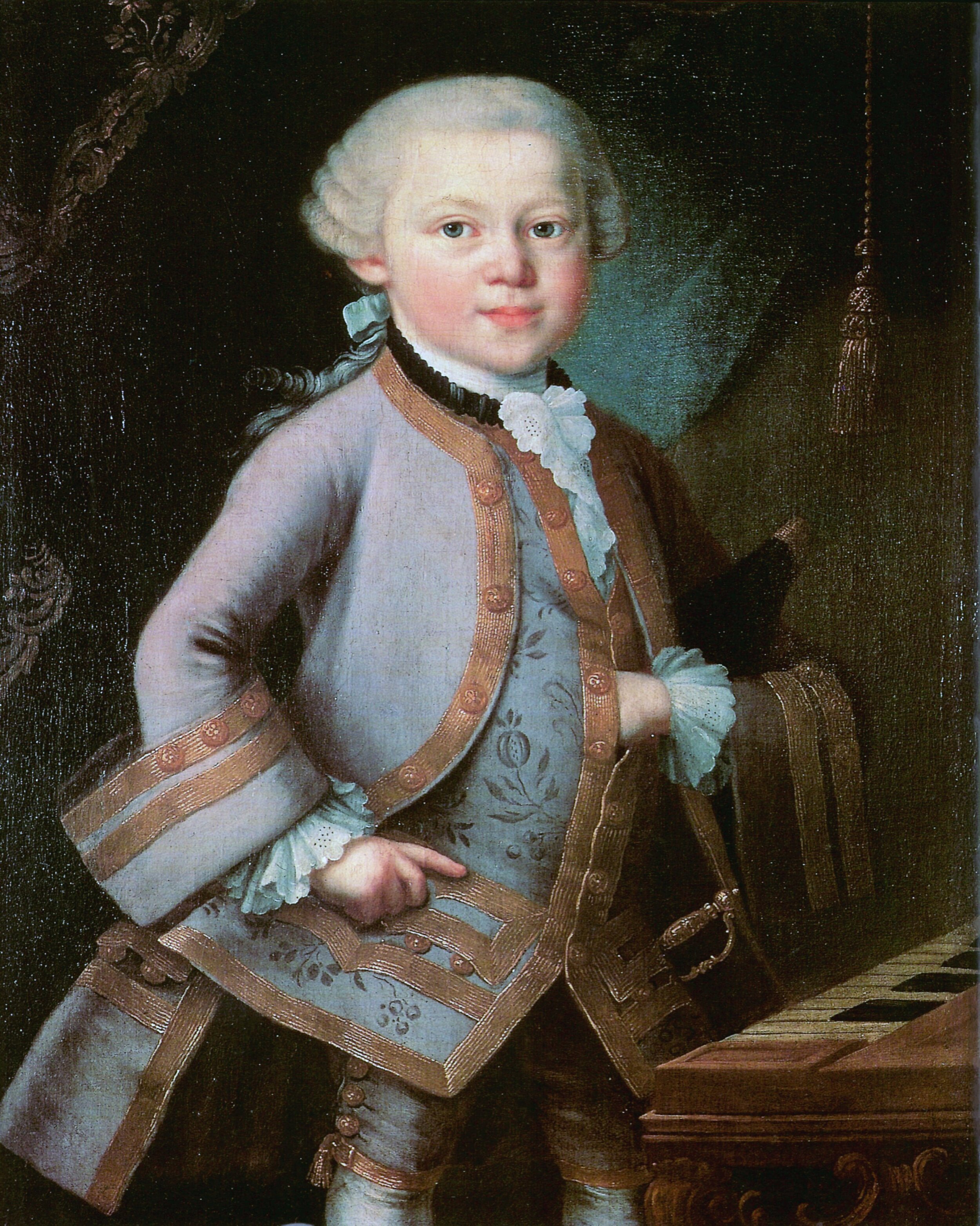
A Mozart Celebration
My 2019-2020 season starts this coming weekend with a fantastic program of Mozart with Handel + Haydn Society! Check out these awesome program notes and then come hear it on Friday and Sunday!
Vibrato or no vibrato?
I generally live somewhere between the “straight-tone only” and “vibrato always” worlds, believing that the best singers do both, according to the needs and styles of the repertoire being performed. But what do the treatises say? Early Music Sources does an excellent job exploring the options (with special shout-outs to organ treatises and my perennial fav, Praetorius)!
Preview of The Bach Project presents Dashon Burton
This week’s Early Music Monday is a preview of The Bach Project’s concert coming up on Sunday! Check out the program notes (written by yours truly) and then come hear this fantastic program!
For tickets and more information, click here.
The Bach Project presents Dashon Burton - Bach Cantatas for Solo Bass
These program notes were written by Elise Groves for a program of Bach Cantatas for Solo Bass (BWV 82 and BWV 158) along with works for solo violin and solo organ. This concert was presented by The Bach Project in conjunction with Ashmont Hill Chamber Music on September 22, 2019.
In 1708, 23-year-old Johann Sebastian Bach took up a court position in Weimar. He had previously worked there for a few months shortly after graduating from St. Michael’s School in Lüneburg, so it was known territory, the pay was good, and everything seemed to be going well. He had married Maria Barbara the year before and their first child would be born only a few months after the move to Weimar, soon to be followed by six more. This was also a fruitful time for Bach’s career. Though he had been hired as a court organist, he was eventually promoted to Konzertmeister, which gave him access to a large, well-funded group of professional musicians. He had the freedom to travel to nearby towns to assist with organ improvement projects and build relationships with local organists and builders. During this period, Bach’s reputation as an organist somewhat overshadowed his talents as a composer.
The majority of Bach’s organ music was probably composed while he was in Weimar, including the Fantasia in G major, BWV 572. Known alternatively as “Pièce d’Orgue”, the Fantasia showcases Bach’s talent in developing repertoire uniquely suited to the organ. Essentially a study in “what goes up must come down”, Bach takes the element of the ascending scale and transforms it into a mini-masterpiece, paired with descending scales, florid arpeggios, and dramatic pedal-point. Bach spent a significant amount of time studying and transcribing the works of his contemporaries, particularly those from other countries. In doing so, he adapted elements that he liked into his own style. While scholars debate exactly how “French” BWV 572 is, Bach did transcribe de Grigny’s Premier livre d’orgue (First book of organ music) in 1713 while living in Weimar and was well acquainted with the French organ tradition.
Bach’s interest in French organ music wasn’t his only foray into international styles. He was especially drawn to Italian music, particularly the concerti of Corelli and Vivaldi. Bach’s father had been his first violin teacher, and while he was known primarily as an organist, his talents as a violinist were not far behind. Though Bach wouldn’t publish the Violin Sonata No. 1 in G minor, BWV 1001 until 1720 (with the complete Sonatas and Partitas for Solo Violin), he likely began working on it while he was in Weimar. From our soloist:
“Bach’s groundbreaking sonatas for unaccompanied violin combine ideas drawn from violin works by his German and Italian predecessors with his unmatched skill for polyphonic keyboard writing—including the fugue. The fugues he conceived for violin “senza Basso” were of unprecedented complexity for the instrument of the Baroque period, pushing its polyphonic capabilities to extremes. As an accomplished violinist, Bach was ambitious with the technical challenges he presented to the player to execute intricate imitative counterpoint and interpret the dramatic development of a musical form typically written for the multi-voiced pipe organ. Transcriptions of the G minor fugue include Bach’s own arrangement for lute, as well as a reworking for organ, known as the Prelude and “Fiddle Fugue” in D minor.
For this performance, a replica of a violin from Stradivari’s Golden period made in 1990 by John Widelski, and an early Baroque model bow made by David Hawthorne in 2003 will be played. The thicker, more resistant gut strings and lower tension neck-set of the period model violin, together with the short model bow with a convex stick that was prevalent before 1720 serve to help recreate the sound of the violin as Bach knew it.” – Julia McKenzie
After Bach’s promotion to Konzertmeister in 1714, he turned his compositional energies more toward cantatas. His new position required that he “perform a piece of his own composition under his own direction, in the chapel of the royal castle, on every fourth Sunday at all seasons.” The exact origins of Der Friede sei mit dir, BWV 158 are somewhat unclear, but portions of it likely originated from this period in Weimar. The source materials indicate that the first and last movements may have been added later when it was revised to be used on the Tuesday after Easter (hence all the Holy Week imagery in the text). But the middle two movements are quite different and may have originally been part of a larger work for the Feast of the Purification of Mary.
The Feast of the Purification (also known as The Presentation of Our Lord in the Temple, or Candlemas) centers around the story of Simeon and the moment in which he met the infant Jesus. From Luke 2:
And behold, there was a man in Jerusalem whose name was Simeon, and this man was just and devout, waiting for the Consolation of Israel, and the Holy Spirit was upon him. And it had been revealed to him by the Holy Spirit that he would not see death before he had seen the Lord’s Christ. So he came by the Spirit into the temple. And when the parents brought in the Child Jesus, to do for Him according to the custom of the law, he took Him up in his arms and blessed God and said:
“Lord, now You are letting Your servant depart in peace,
According to Your word;
For my eyes have seen Your salvation
Which You have prepared before the face of all peoples,
A light to bring revelation to the Gentiles,
And the glory of Your people Israel.”
And Joseph and His mother marveled at those things which were spoken of Him. Then Simeon blessed them, and said to Mary His mother, “Behold, this Child is destined for the fall and rising of many in Israel, and for a sign which will be spoken against (yes, a sword will pierce through your own soul also), that the thoughts of many hearts may be revealed.”
From that passage, verses 29-32 are referred to as the Nunc Dimittis (the first two words of Simeon in Latin) and became an integral part of the Catholic liturgy, appearing every night in the service of Compline as well as other services throughout the church year.
Ich habe genug, BWV 82 was also written for the Feast of the Purification, but its origins are much more clear. It was premiered on February 2, 1727 at the Thomaskirche in Leipzig. Arguably one of the best known of all of Bach’s cantatas, BWV 82 was highly regarded by Bach himself. He revised it several times after the premier, creating versions for soprano and mezzo-soprano, as well as a revised version for bass.
Death was an ever-present companion in 18th-century life; Bach had been orphaned at age ten, and of his twenty children, only ten of them survived to adulthood. The German church viewed death as the fulfillment of the human experience whereby the soul was finally reconciled to God and free from the torments of earthly life. Just as Simeon could now die peacefully, knowing that God had been faithful after he saw the fulfillment of the promises God had made to him, these cantatas encourage the believer to not fear death but to find peace in its release.