Ne irascaris

There are so many fascinating topics to explore in Early Music, but the real reason I do what I do is the chance to perform gorgeous pieces like this one.

In dulci jubilo

The best Christmas Carols are the medieval ones! Last week’s Guggenheim concerts included Robert Pearsall’s luscious setting of “In dulci jubilo”, possibly my favorite carol of all. Merry Christmas!
"In dulci jubilo" (Latin for "In sweet rejoicing") is a traditional Christmas carol. In its original setting, the carol is a macaronic text of German and Latin dating from the Middle Ages. Subsequent translations into English, such as J. M. Neale's arrangement "Good Christian Men, Rejoice" have increased its popularity, and Robert Pearsall's 1837 macaronic translation is a mainstay of the Christmas Nine Lessons and Carols repertoire. J. S. Bach's chorale prelude based on the tune (BWV 729) is also a traditional postlude for Christmas services.

The original song text, a macaronic alternation of Medieval German and Latin, is thought to have been written by the German mystic Heinrich Seuse circa 1328.[1] According to folklore, Seuse heard angels sing these words and joined them in a dance of worship.[2] In his biography (or perhaps autobiography), it was written:

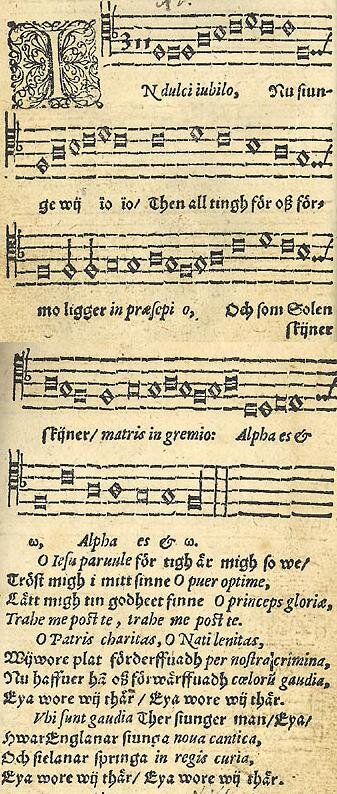
"In dulci jubilo" The melody as published in the 1582 Finnish music collection Piae Cantiones , which alternates the Latin with Swedish. Song Language German, Latin " In dulci jubilo" ( Latin for "In sweet rejoicing") is a traditional Christmas carol.

Resonet in Laudibus

Michael Praetorius is a familiar name at this time of year, mainly for the carol “Lo how a rose e’re blooming”. His setting of Resonet in Laudibus for 4 soprano parts is on the program I’m singing tonight! Can’t come? Have a listen to Westminster Abbey’s version instead!

Bach's Church Music in Latin

Did you know Bach wrote liturgical music in Latin (and not just the Magnificat and B minor mass)? Early Music Monday takes a peek at this repertoire in advance of The Bach Project’s concert next Sunday!
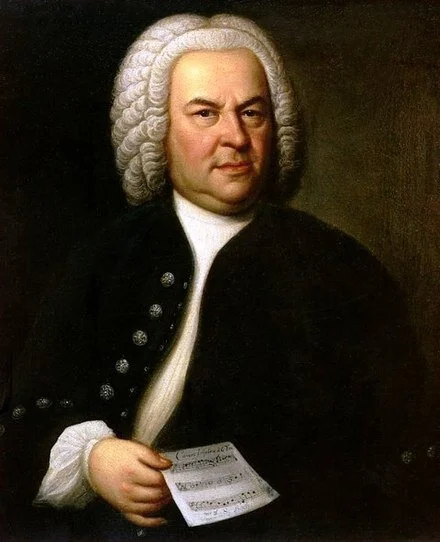
440px-Johann_Sebastian_Bach.jpg

Most of Johann Sebastian Bach's extant church music in Latinsettings of (parts of) the Mass ordinary and of the Magnificat canticle— dates from his Leipzig period (1723–50). Bach started to assimilate and expand compositions on a Latin text by other composers before his tenure as Thomaskantor in Leipzig, and he continued to do so after he had taken up that post. The text of some of these examples by other composers was a mixture of German and Latin: also Bach contributed a few works employing both languages in the same composition, for example his early Kyrie "Christe, du Lamm Gottes" [scores].[1]

The bulk of Bach's sacred music, many hundreds of compositions such as his church cantatas, motets, Passions, oratorios, four-part chorales and sacred songs, was set to a German text, or incorporated one or more melodies associated with the German words of a Lutheran hymn. His output of music on a Latin text, comprising less than a dozen of known independent compositions, was comparatively small: in Lutheranism, and Bach was a Lutheran, church services were generally in the native tongue, which was German for the places where Bach was employed. A few traditional Latin texts, such as the Magnificat and some excerpts of the Mass liturgy, had however not been completely banned from worship practice during the Protestant Reformation. It depended on local traditions whether any of such Latin texts were used in church services occasionally. In Leipzig, compared to Lutheran practice elsewhere, an uncharacteristic amount of Latin was used in church:[2] it included music on Latin texts being performed on ordinary Sundays,[3] on high holidays (Christmas, Easter, Pentecost), and the Magnificat also on Marian feasts (Annunciation, Visitation, Purification).

In his first years in Leipzig Bach produced a Latin Magnificat and several settings of the Sanctus. In 1733 he composed a large-scale Kyrie–Gloria Mass for the Catholic court in Dresden. Around the same time he produced the final version of his Magnificat. Probably around 1738–39 he wrote four more Kyrie–Gloria Masses, to a large extent based on earlier compositions. From around 1740 there was an increase of Bach copying and arranging stile antico Latin church music by other composers, which sheds light on a style shift towards more outspoken polyphonic and canonic structures in his own compositions in the last decade of his life.[4] In the last years of his life Bach extracted a cantata on a Latin text from his 1733 Kyrie–Gloria Mass, and finally integrated that Mass, and various other earlier compositions, into his Mass in B minor.

Most of Johann Sebastian Bach's extant church music in Latin - settings of (parts of) the Mass ordinary and of the Magnificat canticle- dates from his Leipzig period (1723-50). Bach started to assimilate and expand compositions on a Latin text by other composers before his tenure as Thomaskantor in Leipzig, and he continued to do so after he had taken up that post.

Composers like to borrow

Composers never let a good idea go to waste. This week’s example of borrowing is Guerrero’s Missa de la batalla escoutez, based on Janequin’s madrigal “La Guerre” - a Spanish mass setting based on a French madrigal about the Battle of Marignano in 1515.