Original Pronunciation

Today’s Early Music Monday is all about words! Just as original pronunciation of Shakespeare’s English reveals rhymes and hidden puns and brings the language to life, playing early music with an understanding of styles and practices from that time brings the music to life and shows off details that would otherwise be missed.

Sprezzatura

An Early Music Monday post for Labor Day! Here’s the origin of the idea that a performer (athlete, actor, etc.) should “make it look easy” while doing something incredibly difficult. For an added bonus, it might help keep you alive in the always complicated royal court…
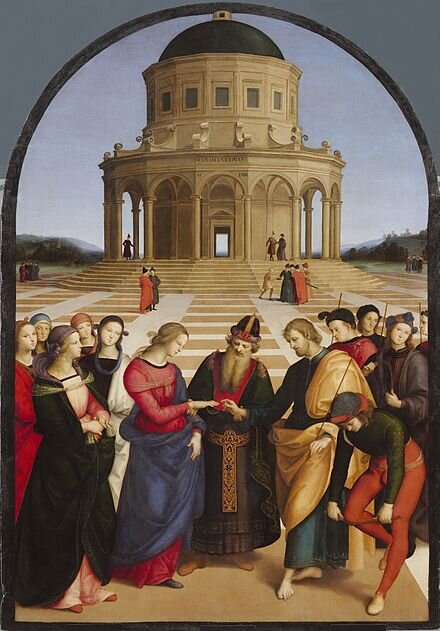
Sprezzatura ([sprettsaˈtuːra]) is an Italian word that first appears in Baldassare Castiglione's 1528 The Book of the Courtier, where it is defined by the author as "a certain nonchalance, so as to conceal all art and make whatever one does or says appear to be without effort and almost without any thought about it".[1] It is the ability of the courtier to display "an easy facility in accomplishing difficult actions which hides the conscious effort that went into them".[2] Sprezzatura has also been described "as a form of defensive irony: the ability to disguise what one really desires, feels, thinks, and means or intends behind a mask of apparent reticence and nonchalance".[3]

The word has entered the English language; the Oxford English Dictionary defines it as "studied carelessness",[4] especially as a characteristic quality or style of art or literature.

Castiglione wrote The Book of the Courtier as a portrayal of an idealized courtier—one who could successfully keep the support of his ruler. The ideal courtier was supposed to be skilled in arms and in athletic events but be equally skilled in music and dancing.[5] However, the courtier who had sprezzatura managed to make these difficult tasks look easy – and, more to the point, not appear calculating, a not-to-be-discounted asset in a milieu commonly informed by ambition, intrigue, etc. Concerning sprezzatura, Castiglione said:

Sprezzatura ([sprettsaˈtuːra]) is an Italian word that first appears in Baldassare Castiglione's 1528 The Book of the Courtier , where it is defined by the author as "a certain nonchalance, so as to conceal all art and make whatever one does or says appear to be without effort and almost without any thought about it".

Julie d'Aubigny

17th-century swordswoman AND star of the Paris Opera? Fought duels with men in her free time (and generally won)? Early Music Monday continues! And you thought Gesualdo was the only salacious story from your music history class…

Julie d'Aubigny (1670/1673–1707), better known as Mademoiselle Maupin or La Maupin, was a 17th-century opera singer. Little is known for certain about her life; her tumultuous career and flamboyant lifestyle were the subject of gossip, rumor, and colourful stories in her own time, and inspired numerous fictional and semi-fictional portrayals afterwards. Théophile Gautier loosely based the title character, Madeleine de Maupin, of his novel Mademoiselle de Maupin (1835) on her.

Julie d'Aubigny was born in 1673[1] to Gaston d'Aubigny, a secretary to Louis de Lorraine-Guise, comte d'Armagnac, the Master of the Horse for King Louis XIV. Her father trained the court pages, and so his daughter learned dancing, reading, drawing, and fencing alongside the pages.[2][better source needed] In 1687, the Count d'Armagnac had her married to Sieur de Maupin of Saint-Germain-en-Laye, and she became Madame de Maupin (or simply "La Maupin" per French custom). Soon after the wedding, her husband received an administrative position in the south of France, but the Count kept her in Paris for his own purposes.

Also around 1687, La Maupin became involved with an assistant fencing master named Sérannes. When Lieutenant-General of Police Gabriel Nicolas de la Reynie tried to apprehend Sérannes for killing a man in an illegal duel, the pair fled the city to Marseille.

Julie d'Aubigny (1670/1673-1707), better known as Mademoiselle Maupin or La Maupin, was a 17th-century opera singer. Little is known for certain about her life; her tumultuous career and flamboyant lifestyle were the subject of gossip, rumor, and colourful stories in her own time, and inspired numerous fictional and semi-fictional portrayals afterwards.